Soccer ball guides for South Africa
Choose, Inflate and Care for the Right Soccer Ball
Practical advice on sizes, materials, inflation and upkeep for players, parents, coaches and clubs.
Find Your Size
Compare Materials
Check Inflation
Keep Balls Match-Ready
Explore Soccer Ball Guide Topics
Sizing by Age and Format
Materials and Construction
Inflation and Pressure
Maintenance and Care
Find the Right Ball for Every Game
Size 3: Younger Players
Ideal for many players aged eight and under, a size 3 ball is lighter and easier for developing feet to control. Check your local league rules before buying.
Size 4: Junior Football
Often used for ages 9–12 and some small-sided formats, size 4 helps young players build passing and shooting skills without jumping to a full-size ball.
Size 5: Older Players
The standard choice for players aged 13 and up in most full-field matches, size 5 suits training and competitive play when league regulations allow it.
Match the Ball to the Format
Age is only a starting point: school leagues, futsal and club competitions may specify different sizes or ball types. Confirm the format and level of play before choosing.
Soccer Ball Materials and Construction
A soccer ball’s outer cover shapes how it feels and how long it lasts. Synthetic polyurethane (PU) often provides a softer, more responsive touch, while PVC tends to resist scuffs well on abrasive school fields and hard ground. Beneath the cover, foam and fabric layers add cushioning and help the ball retain its shape. The bladder, usually butyl or latex, holds the air: butyl generally retains pressure longer, while latex can feel more responsive but needs more frequent inflation.
Panel construction matters too. Stitched panels can be durable, but seams may take on water during wet matches. Thermally bonded panels create a smoother surface with fewer exposed seams, helping limit water uptake. For frequent play on rough South African pitches, prioritise a hard-wearing cover; for grass training or matches, consider the touch and weather resistance that best suit your conditions.
How to Inflate a Soccer Ball Safely
1
Check the Pressure Range
2
Prepare the Pump and Valve
3
Inflate, Measure and Recheck
Everyday Soccer Ball Care
Brush Off Loose Dirt
After play, remove dry dust and grit with a soft brush so abrasive particles do not wear the cover.
Wipe with Mild Soapy Water
Use a damp cloth and a little mild soap for muddy marks; avoid harsh cleaners that can damage the surface.
Keep the Valve Clean
Wipe around the valve before inserting a pump needle to stop sand and dirt entering the opening.
Dry at Room Temperature
Air-dry a wet ball in the shade rather than placing it near a heater or in direct, intense sunlight.
Store in a Cool, Dry Spot
Keep balls away from damp floors, car boots and prolonged heat, which can affect the cover and bladder.
Maintain Suitable Pressure
Check the printed pressure range periodically; leaving a ball overinflated can strain its panels and seams.
Inspect Seams and Panels
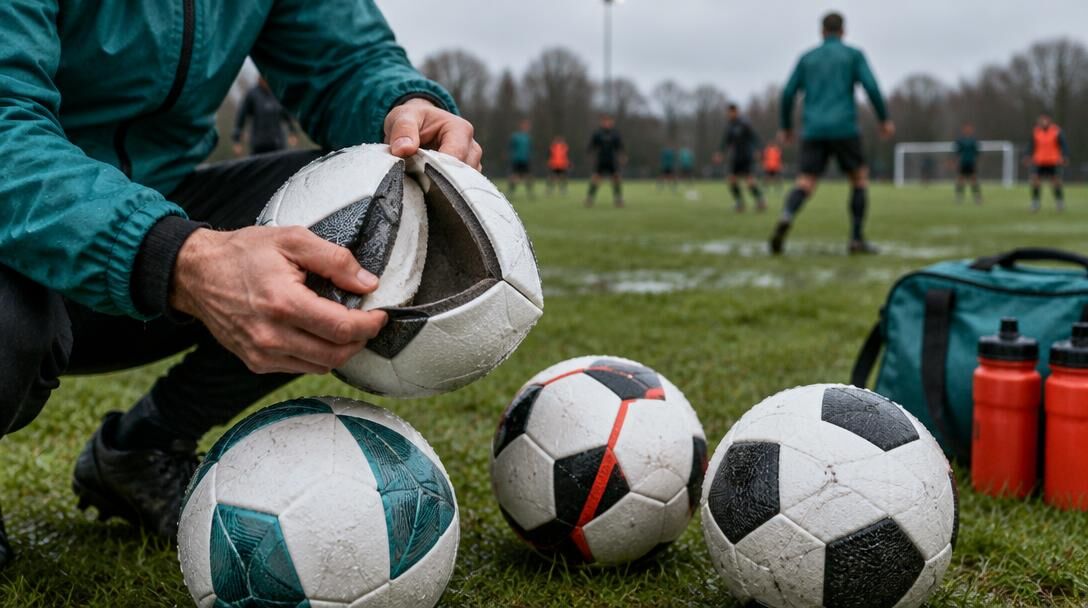
Look for lifting edges, deep cuts or unusual bulges before training, especially after play on rough ground.
Check for Slow Leaks
If a ball softens between sessions, test its pressure and inspect the valve or cover before using it again.
Soccer Ball Questions, Answered
Find practical answers on sizing, construction, inflation and care before choosing a ball for South African pitches.
What size soccer ball should my child use?
Size 3 generally suits children under 8, size 4 suits ages 8–12, and size 5 is standard from age 13 onward. Check your league’s rules, as age groups can vary.
What size ball do adults play with?
Adults typically use a size 5 ball for training and matches. Futsal uses a different, lower-bounce ball, so check the format before buying.
How much should I inflate a soccer ball?
Follow the pressure range printed near the valve and check it with a pump gauge. An underinflated ball can lose shape; an overinflated one may feel too hard and wear faster.
Should I choose a PU or PVC soccer ball?
PU coverings usually offer a softer touch, making them popular for match play. PVC is often tougher and more affordable for frequent training, though feel varies by ball.
What is the difference between a training ball and a match ball?
Training balls prioritise durability for repeated use. Match balls generally prioritise consistent flight, touch and shape; check your competition’s specifications before choosing one.
Which ball works best on rough or hard ground?
Choose a durable ball labelled for the surface you use, such as hard ground or artificial turf. Rough surfaces can scuff softer match-ball coverings more quickly.
How do I clean a soccer ball after playing?
Wipe off dirt with a damp cloth and mild soap, then let the ball air-dry at room temperature. Avoid soaking it or using harsh cleaners, especially around seams and the valve.
How should I store a soccer ball?
Keep it clean and dry, away from direct sun and hot car boots. For longer storage, release a little air without fully flattening the ball so it retains its shape.
Why does my soccer ball keep losing air?
A small amount of pressure loss over time is normal. If it deflates quickly, check the valve and seams; moisten the pump needle before inflating to help prevent valve damage.
Find the Right Ball for Your Game
Use the guides to compare sizes, materials and playing surfaces, then learn simple care habits that help your soccer ball last—whether it’s for school, club training or weekend matches.